August 8, 2026
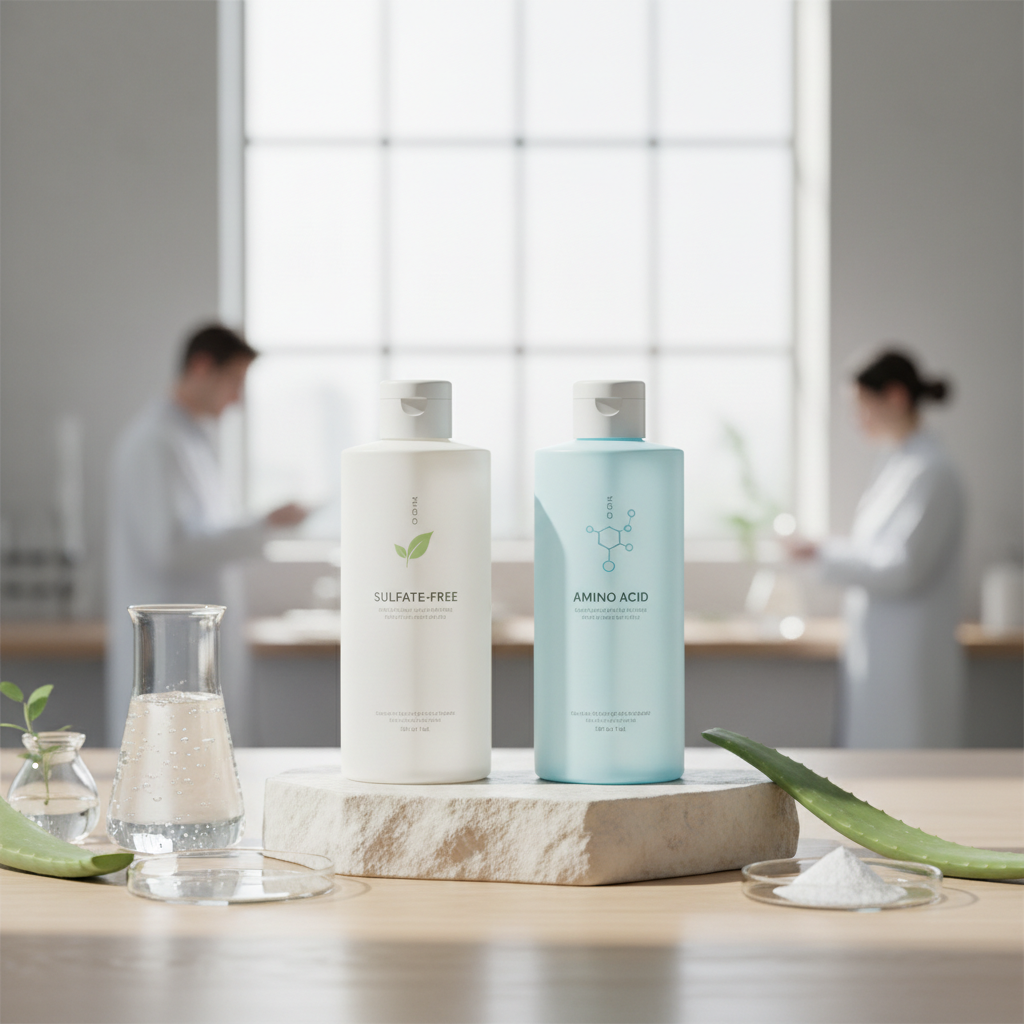
Sulfate-Free vs. Amino Acid Shampoo: How to Choose
Confused between sulfate-free and amino acid shampoos? Our expert formulators break down the science to help you pick the perfect cleanser for your hair type and goals.
By RAY (Thailand) Editorial Team
'''
The Great Cleanser Debate: Understanding Your Shampoo Bottle
Walk down any hair care aisle, and you'''re bombarded with terms: "sulfate-free," "paraben-free," "silicone-free," and now, "amino acid-based." It'''s a confusing landscape for even the most discerning beauty enthusiast. As leaders in cosmetic innovation, RAY is here to demystify one of the most common questions our formulators receive: What is the real difference between sulfate-free and amino acid shampoos, and which one is right for me?
Understanding the fundamental role of a surfactant—the ingredient responsible for cleaning—is the first step. Surfactants are compounds that lower the surface tension between water and dirt, oil, and other impurities, allowing them to be washed away. The type of surfactant used in a shampoo formula dramatically impacts its performance, feel, and suitability for different hair types. Let'''s dive into the two most popular modern choices.
What Are Sulfates and Why Go Sulfate-Free?
For decades, sulfates—primarily Sodium Lauryl Sulfate (SLS) and Sodium Laureth Sulfate (SLES)—were the gold standard in shampoos. They are incredibly effective surfactants, creating the rich, foamy lather many of us associate with a deep clean. They are inexpensive and efficient, which is why they became so ubiquitous.
The Downside of a Deep Clean
The very strength of sulfates is also their main drawback. They are such powerful cleansers that they can easily strip the hair and scalp of their natural, protective oils (sebum). This can lead to a host of issues, including:
-
Dryness and Brittleness: By removing natural oils, sulfates can leave hair feeling rough, dry, and more prone to breakage.
-
Scalp Irritation: For a significant portion of the population, sulfates can cause scalp dryness, itchiness, and irritation.
-
Color Fading: The stripping action of sulfates can lift the cuticle of color-treated hair, causing your expensive dye job to fade prematurely.
-
Increased Frizz: When the hair is stripped of its natural moisture, it becomes more susceptible to humidity, leading to frizz.
This is why the "sulfate-free" movement gained so much momentum. Sulfate-free shampoos use alternative, milder cleansing agents that clean the hair and scalp effectively without the harsh, stripping side effects. They are an excellent choice for anyone with dry, damaged, color-treated, or sensitive skin.
The Rise of Amino Acid Shampoos: The Gentle Powerhouse
Enter the next evolution in gentle cleansing technology: amino acid-based surfactants. These are the mildest and most sophisticated cleansers used in hair care today. As the name suggests, they are derived from amino acids, the very building blocks of proteins in our hair and skin.
Common amino acid surfactants you might see on an ingredient list include Sodium Cocoyl Glutamate, Sodium Lauroyl Sarcosinate, and Sodium Cocoyl Apple Amino Acids. At RAY, our formulators favor these ingredients for their unique combination of effectiveness and gentleness.
The Benefits of Amino Acid Cleansers
Amino acid shampoos offer a premium experience with tangible benefits that go beyond simple cleaning.
-
Ultra-Gentle Cleansing: They remove excess oil and product buildup without disrupting the scalp'''s natural pH balance or stripping its protective lipid barrier. This makes them the ultimate choice for sensitive, irritated, or very dry scalps.
-
Moisture Retention: Unlike traditional surfactants that can leave hair feeling "squeaky" (which is actually a sign of stripped hair), amino acid cleansers help the hair retain its natural moisture. The result is hair that feels soft, hydrated, and supple post-wash.
-
Rich, Creamy Lather: While early sulfate-free options sometimes disappointed in the lather department, modern amino acid surfactants create a dense, creamy, and stable foam that feels luxurious and rinses cleanly.
-
Enhanced Hair Health: Because they are derived from the building blocks of hair itself, they are biocompatible and support the overall health and integrity of the hair fiber.
How to Choose: A Formulator'''s Guide
So, how do you decide which is best for you? It comes down to your hair type, scalp condition, and primary concerns.
Choose a Sulfate-Free Shampoo if:
-
You have normal to slightly dry or oily hair.
-
You have color-treated hair and want to preserve its vibrancy.
-
You don'''t have significant scalp sensitivity but want to avoid potential dryness.
-
You are looking for a good balance of effective cleaning and gentle care.
Choose an Amino Acid Shampoo if:
-
You have a very dry, itchy, or sensitive scalp.
-
Your hair is extremely dry, damaged, or chemically processed (e.g., from bleaching or perms).
-
You want the gentlest possible cleanse without sacrificing a luxurious lather.
-
You are invested in a premium, clean beauty routine that prioritizes scalp health and hair hydration.
The RAY Conclusion: Clean Science for Beautiful Hair
The journey from harsh sulfates to gentle amino acids reflects the broader evolution of the beauty industry towards smarter, kinder, and more effective formulations. While a well-formulated sulfate-free shampoo is a fantastic choice for most people, an amino acid shampoo represents the pinnacle of gentle cleansing technology.
At RAY, we believe in providing options backed by science. By understanding the ingredients in your shampoo, you empower yourself to make the best choice for your unique hair needs. Whether you opt for a gentle sulfate-free formula or the ultra-mild luxury of an amino acid cleanser, you are taking a crucial step towards a healthier scalp and more beautiful hair.
'''